

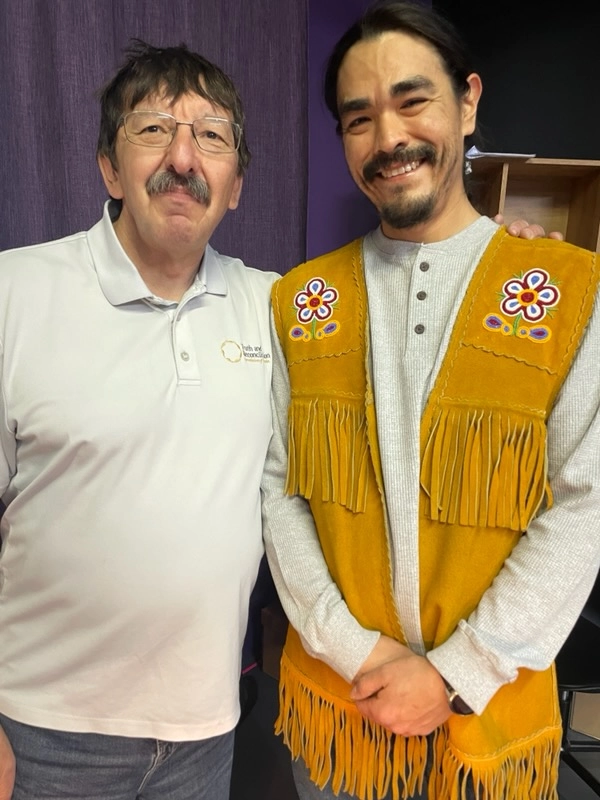
Rattle is based on the true stories of real people— and one of them, Robert Doucette, a cultural advisor to the production of Rattle, has spent decades fighting for recognition of what was done to Métis children during the Sixties Scoop. Doucette, a Métis Sixties Scoop survivor from Saskatchewan and longtime activist with the Métis Nation, is the inspiration for Dan, one of the two central characters in Rattle.
In October 2017, when the federal government announced a $750 million settlement for Sixties Scoop survivors, Doucette responded with this open letter — a firsthand account of what it means to be excluded, again, from a promise of justice.
We wanted to take this opportunity to highlight Robert’s words from this time, as they speak to one of our play’s deepest themes: that recognition and belonging are not just personal needs, but political struggles that Métis people are still, after generations, being forced to wage.
Letter to the Editor by Robert Doucette
On the Federal Government Sixties Scoop Settlement in October 2017
“On October 6th, 2017, I, like many Métis survivors of the Sixties Scoop, watched with anticipation as Carolyn Bennett, Minister for Indigenous Affairs, stepped to the news conference podium to announce an agreement in principle to settle the Sixties Scoop lawsuits, $750 million in compensation for Indian and Inuit children taken from their homes, and a tearful statement, “Language and culture, apology and healing – these are the essential elements to begin to right the wrongs of this dark and painful chapter.”
My first thoughts were thank you, Chief Martell-Brown, for having the courage to go the limit and to bring justice to all of the Sixties Scoop Survivors. However, I did not hear one word which should have been included in the statement, “Métis.”
I went from hope to disbelief and then disgust when all Métis Sixties Scoop Survivors across Canada came to the painful realization that the Métis were left out of a major announcement, which was heralded as a moment of contrition and reconciliation by the government of Canada.
Next, to my amazement, we started hearing the excuses and reasons from the federal government in which a federal government spokesperson stated that the “federal government cannot offer to settle Métis suits unilaterally. The provinces need to be at the table and that will happen during the second phase of negotiations.” Further, the lawyer for Chief Brown, Jeffery Wilson, set forth in an interview with CBC News Indigenous, “The reason Métis are not included is because there are no relevant records to identify Métis during the relevant period of time.”
For the record, I’m Robert Doucette, son of Dianne Mckay, a proud Métis women from North West Saskatchewan. I’m the grandson, five generations removed of Mckays, who were involved in the fur trade, lived on traplines, called themselves “people who moved with the seasons,” spoke Cree, Dene, Northern Michif, English, and French. My Mushoom could read three languages. They were, and their descendants are, intelligent, proud, hard working people, Canadians, who never gave up believing Canada some day would treat this Métis family with respect and deliver what they promised our family.
I was placed in a foster home in Duck Lake, Saskatchewan, in September of 1962. I was put on the Saskatchewan Adopt an Indian and Metis (AIM) directory list for adoption and given a social services number. On my birth certificate it indicates my ethnicity, Métis. I met my mother when I was twenty years old, and I never met my Kookum nor Mushoom, who would ask my mother to go and find his little man because he wanted to see his grandson one more time before he died. My collar bone, was broken by a government health care provider while I was still in my mother’s womb, which resulted in torticollis. I could go on with the litany of pain and despair, but I believe the examples I have provided are enough.
After mentally digesting the impact of last week’s announcement by Minister Bennett, to compensate and begin the reconciliation with Sixties Scoop Survivors, one word comes to my mind, betrayal! How could a Minster of the Crown stand in front of the television cameras, profess sorrow for the Sixties Scoop Survivors, only to leave the Métis out? Accordingly, Minister Bennett’s spokesperson explained they couldn’t unilaterally act to include the Métis, but that’s exactly what they did when they included the Inuit in the agreement in principle. If they could include the Inuit, why not the Metis? Oh, yes, I’m still waiting for Premier Brad Wall’s apology.
Growing up as a foster child, you always have one thing on your mind, “Is today the day they are coming to take me?” When we found out who we were and where we came from and made our way back to our home communities, we were told by some Métis members of the community we were not welcome, told we were not Métis, and shamed for trying to go home. Today I ask all Canadians to stand with the Métis Sixties Scoop Survivors. Sadly, Minister Bennett continues the same line Canadian politicians have taken over the years, “Yes, you Métis have rights – however, you no longer exist!” We will deal with you in the next phase. Just like my Mushoom who was supposed to receive his Métis scrip 111 years ago, we are both still waiting for justice.
Robert G. Doucette
Métis Sixties Scoop Survivor“
Related: CBC News article (Oct. 5, 2017) by John Paul Tasker on the Federal Sixties Scoop settlement